Every food blogger knows the feeling of testing a recipe for the fourth time. The first batch of pho broth was cloudy, the second too salty, the third close. You keep adjusting one variable at a time until the result is repeatable. Buying a backlink for your recipe site works the same way. The first purchase is a test, and you only learn something if you change one variable at a time and write down what you did.
This article follows a made-up but realistic scenario. Linh runs a small Vietnamese cooking blog with about 120 recipes. Her traffic comes mostly from Google, and she wants to try a paid textlink for the first time. Her budget is small, and every number below is an assumption, not a result from a real campaign. The case is a way to show how one page on Backlink247's Khám Phá content hub can help a beginner judge a link marketplace before depositing money.
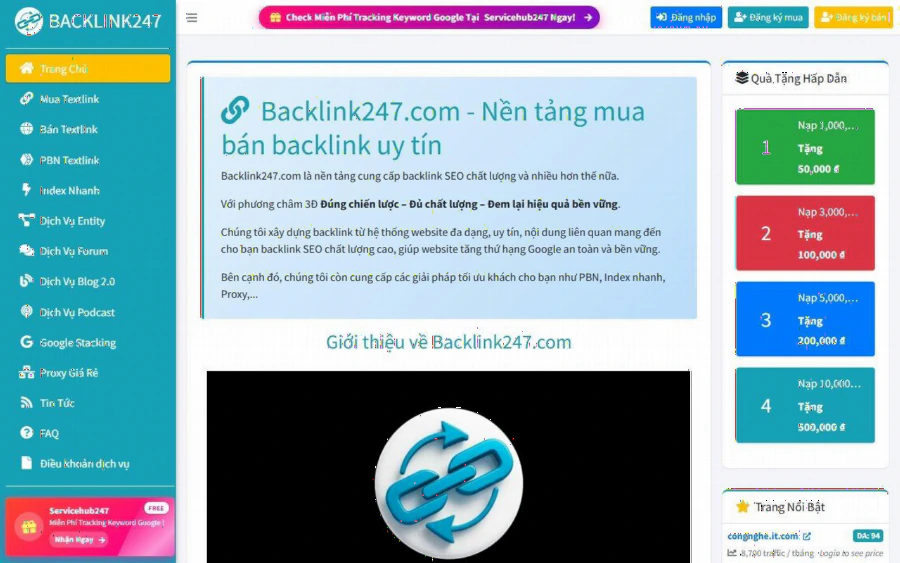
The Backlink247 homepage in the browser, showing the left navigation menu with buy, sell, PBN, fast indexing and proxy sections, plus four deposit bonus tiers on the right.
The problem: you cannot taste a backlink before you buy it
A recipe has a photo, a rating and reviews. A backlink has almost none of that. When Linh opens a marketplace, she is choosing a website she has never visited, run by someone she has never met, to publish a link to her pho recipe. The risks are easy to list: a site with no real readers, a link that disappears after a month, or a page that sits unindexed so Google never sees it.
Backlink247 is a Vietnamese marketplace for buying and selling textlinks. According to its homepage, it also offers PBN textlinks, fast indexing, entity, forum, Blog 2.0 and podcast services, Google Stacking and low-cost proxies. The platform's own product notes say buyers can get a refund if a link is lost, and a full refund if a purchased page is not indexed. Sellers are paid within 72 hours, and support is advertised as available around the clock. Those are claims from the platform, so Linh treats them as questions to verify in the terms before she pays, not as guarantees.
Step one: read what the site publishes
Before spending anything, Linh does what she would do before trusting a new butcher: she looks at what the shop puts on display. On the Khám Phá page she finds a list of articles with a category menu on the right (Backlink, FAQ, Khám phá, and Backlink and SEO), pagination running across four pages, and a "Popular Posts" column.
Here is what she notices, and why each point matters:
- The topics are broad. Per the page, the articles cover football history, SEO topics such as E-E-A-T, affiliate keyword tracking, and several gaming and betting posts. For a food blogger, that is a signal to read the placement rules carefully. A link on a page about cooking should sit among related content, and a mixed content hub is a reason to ask the seller which category her link would appear in.
- The popular posts are about buying links. Three of them are dated in December 2023 and one in May 2024, and they cover what to watch when buying textlinks, how a backlink strategy affects rankings, and the purchase process. These are the most useful reads for a newcomer, so Linh reads them first.
- View counts are visible but unlabeled. The page shows small numbers next to each post, from single digits to a few hundred. The page does not explain them, so Linh does not treat them as traffic data. She notes them as something to ask about.
This is an honest limit of the hub. It tells you what kind of operator you are dealing with, but it does not replace the numbers you need for a decision.
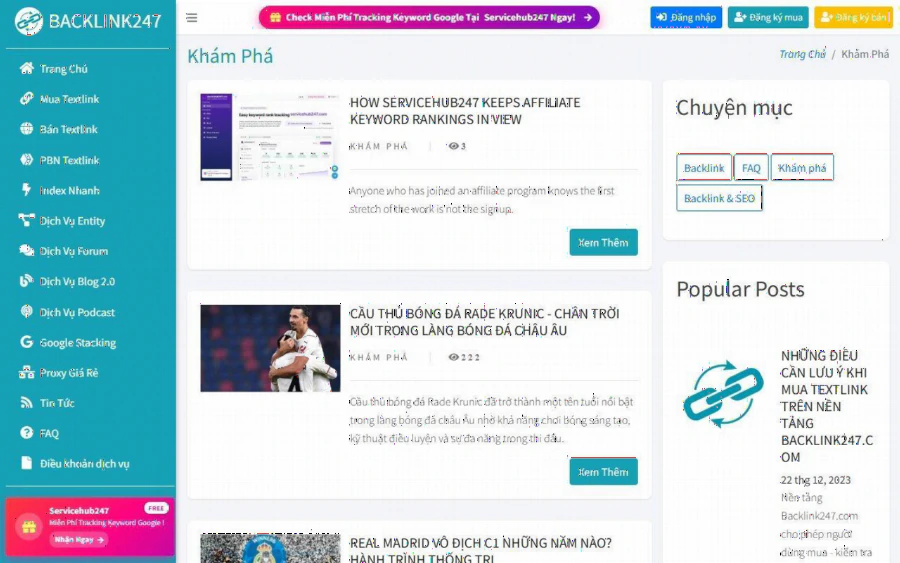
The Khám Phá page listing articles with thumbnails, a category menu on the right and a Popular Posts column about buying textlinks.
Step two: turn the reading into a test plan
With the reading done, Linh writes a plan the way she would for a recipe test. Her assumptions are simple: one recipe page to promote, one link, one month of tracking.
1. Pick the target page. She chooses her pho broth recipe, which already ranks on the second page for a few searches.
2. Pick the placement. On the textlink catalogue she looks for sites where a food or lifestyle link would not look out of place. The homepage shows listing cards with a domain authority number and a monthly traffic estimate, and the price is hidden behind a login. She registers a buyer account to see prices.
3. Fund small. The homepage lists deposit bonuses: deposit 1,000,000 VND and receive 50,000 VND extra, with larger tiers at 3,000,000, 5,000,000 and 10,000,000. For a first test Linh deposits only the smallest tier, because she does not want to commit before she has seen one link work.
4. Write the anchor naturally. She uses a descriptive phrase about the dish, not an exact keyword repeated everywhere.
5. Record the baseline. Before the link goes live she notes her pho page's current position and clicks from Search Console.
Notice that the plan never promises a result. A single link will not carry a recipe page to the top of Google, and a good outcome might be nothing more than a small, steady improvement.
Step three: check, wait, compare
After the link is published, Linh checks three things: that the link is live and points to the right page, that the page containing it gets indexed, and that her own page's position moves over four to six weeks. If the page is not indexed, the platform's fast indexing service and its refund policy for unindexed pages are the next things to read about. If the link vanishes, she goes back to the lost-link refund terms. She keeps a simple log: date bought, price, site, anchor, index date, ranking before and after.
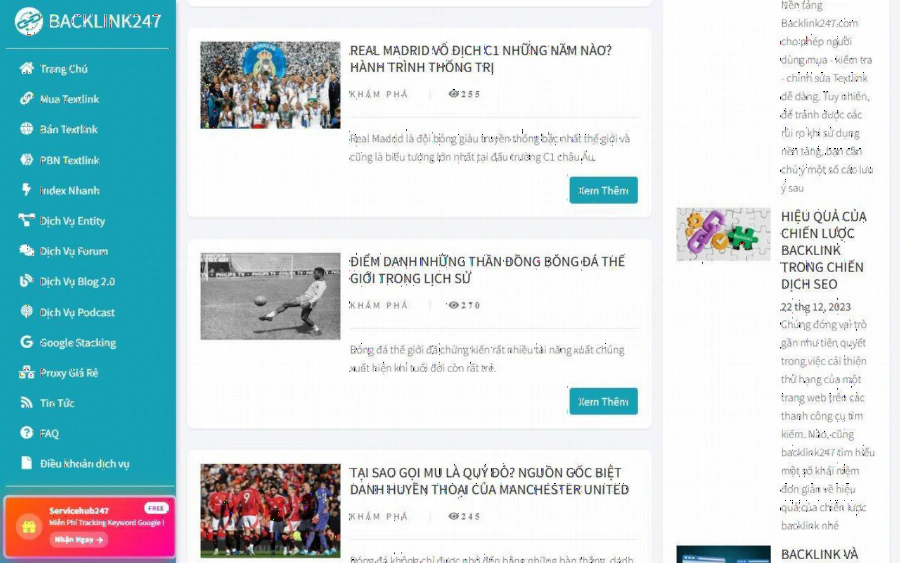
A lower section of the Khám Phá page showing more article cards and the Popular Posts column with backlink strategy articles.
Strengths and limits, stated plainly
What works for a beginner. The marketplace sits in one place with a buying flow, a separate seller flow, and a FAQ. The content hub gives a quick feel for how the operator writes. The deposit model lets you start small. A buyer who wants a refund route for lost or unindexed links at least has one written in the platform's own description.
What to watch. The site interface is in Vietnamese, with some English banners. Textlink prices are shown only after login. The content hub mixes SEO with sports and gaming posts, so a food blogger should confirm which pages would host her link. And the view counts and traffic figures on listings are platform-supplied, so verify them with your own tools if you can.
Who it suits. Site owners who already read Vietnamese, want to test a paid link with a small deposit, and are willing to keep a log. It suits people who treat link buying as an experiment, not a shortcut.
Who should skip it. Anyone who needs an English interface, a public price list before registering, or a guaranteed ranking outcome. No platform can promise the last one.
Where Linh ends up
In the scenario, Linh spends her first month collecting data, not celebrating. She learns whether the link was indexed, how long it took, and whether her pho page moved. If it did, she repeats the test on a second recipe and changes one thing, such as the placement category. If it did not, she has lost a small, known amount and gained a clear log. That is the same discipline that makes a recipe repeatable.
To try the same approach, start by reading the hub and the popular guides, then compare the terms with your own plan. Take your time, change one variable at a time, and write everything down.